Service · Simulation studies
Simulation studies
Traction power / electrification, headway and rolling stock studies, under normal, failed-substation and emergency conditions. All studies use Hi-SimuX, the integrated train performance, operation, traction power and signalling simulator.
Traction power / electrification system simulation
Hi-SimuX provides the detailed analyses needed for the most cost-effective designs, while ensuring operability under normal and contingency conditions. Outputs vary with the scope of the project; the main ones are:
- Instantaneous and RMS current demand from substations and each feeder cable; RMS values for user-selected time windows
- Train voltage levels
- Running rail voltage rise (“touch potential”) with respect to ground, and stray currents
- Energy consumption, regenerative energy usage rate and similar
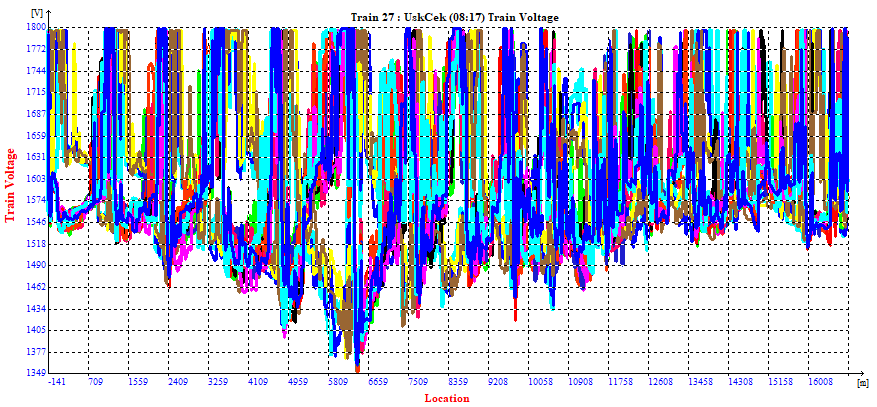
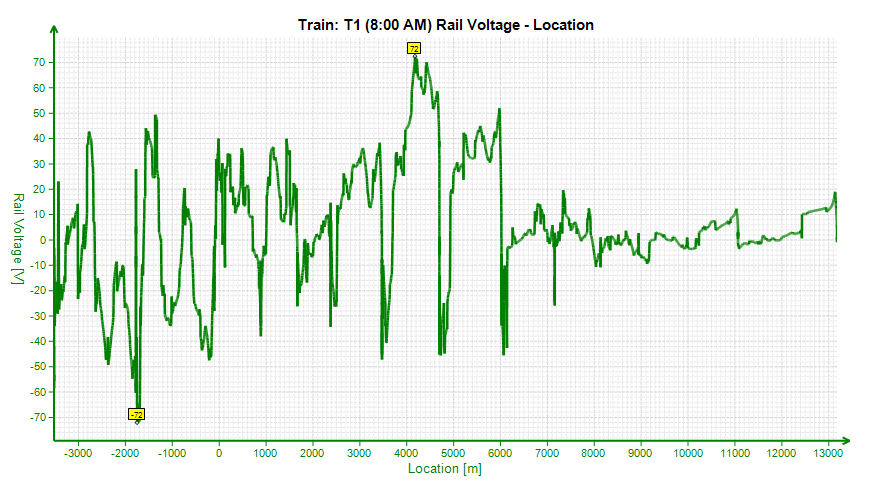
A long-running traction system may need renovation, but what is the most cost-effective investment plan? With Hi-SimuX the existing traction system can be tested for new stations, new trains or shorter headways, and solutions developed from the simulation results where needed.
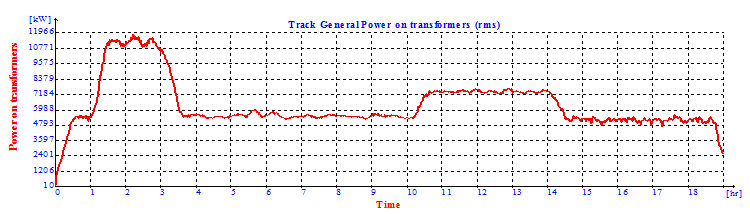
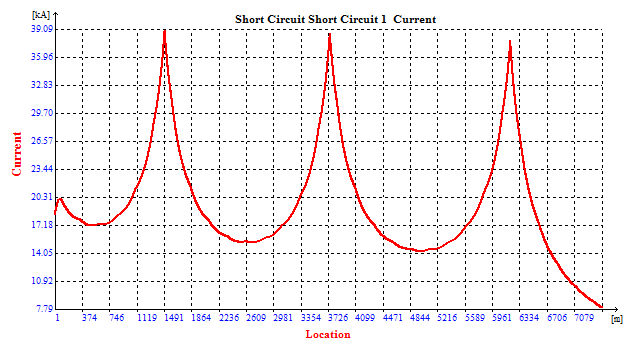
Hi-SimuX quickly analyses the effect of additions or changes to the traction system, such as adding a substation or a feeder cable, optimizing substation output voltage or changing the return current system. Correct protection relay settings for circuit breakers are vital for safe operation: Hi-SimuX calculates close and remote short-circuit currents from the steady state of DC-side faults, and automatically produces tables that help choose breaker settings from the currents and powers in all scenarios.
Headway analysis and operation simulation
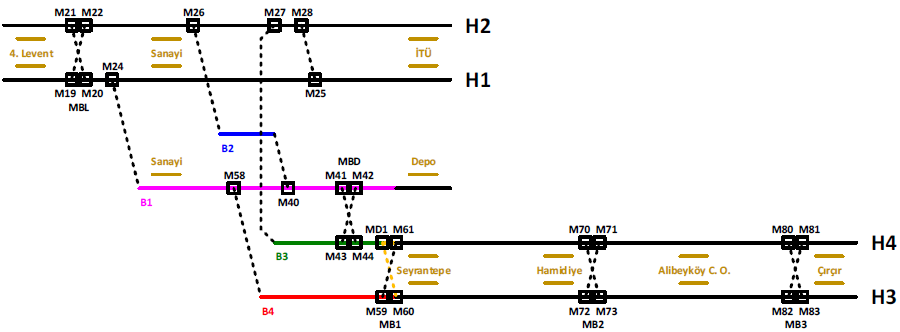
Our operations analysis covers feasibility studies, service and operation planning, journey time estimates, network simulation and capacity analysis, fleet requirements, cost-benefit analysis, energy saving studies, evaluation of alternatives and conceptual design.
When scheduled operations approach (or exceed) the practical capacity of the line, the reliability of the existing or proposed plan must be tested. Hi-SimuX supports this analysis under both deterministic (no variability in equipment or system behaviour) and stochastic (randomization that differs from run to run with identical inputs) conditions.
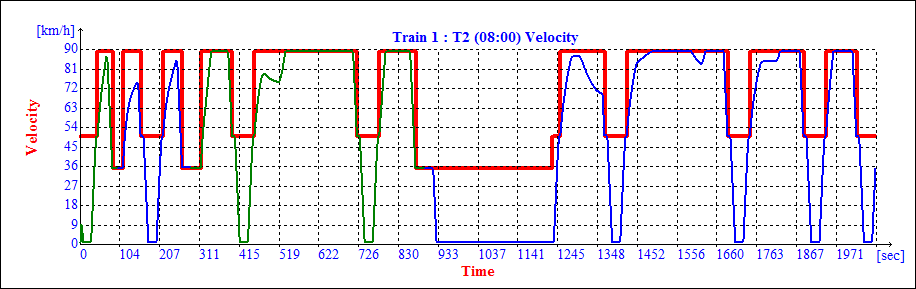
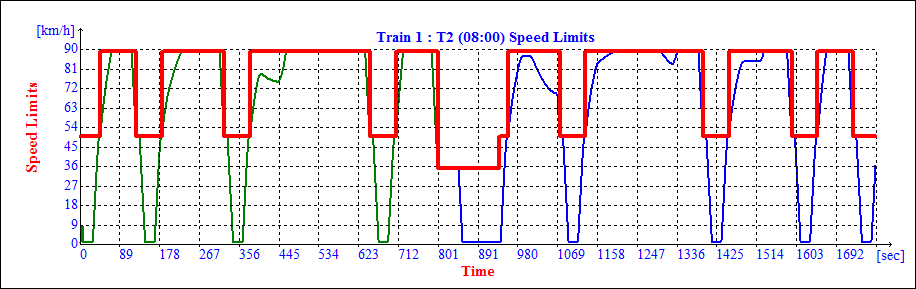
Simulations can cover a single train or multi-track, multi-train situations, either for basic train performance or together with the traction power system. Safe braking algorithms from the train control standards are taken into account, and both un-interfered and interfered achievable headway are determined. Train performance studies give the trip time and average speed between stations, total journey times and the number of trains needed for the operation plan.
For electric rail operators who want to reduce energy use and peak demand, the best energy saving strategies are modelled, including coasting, reduced traction power, voltage-dependent current limiting and regenerative braking.
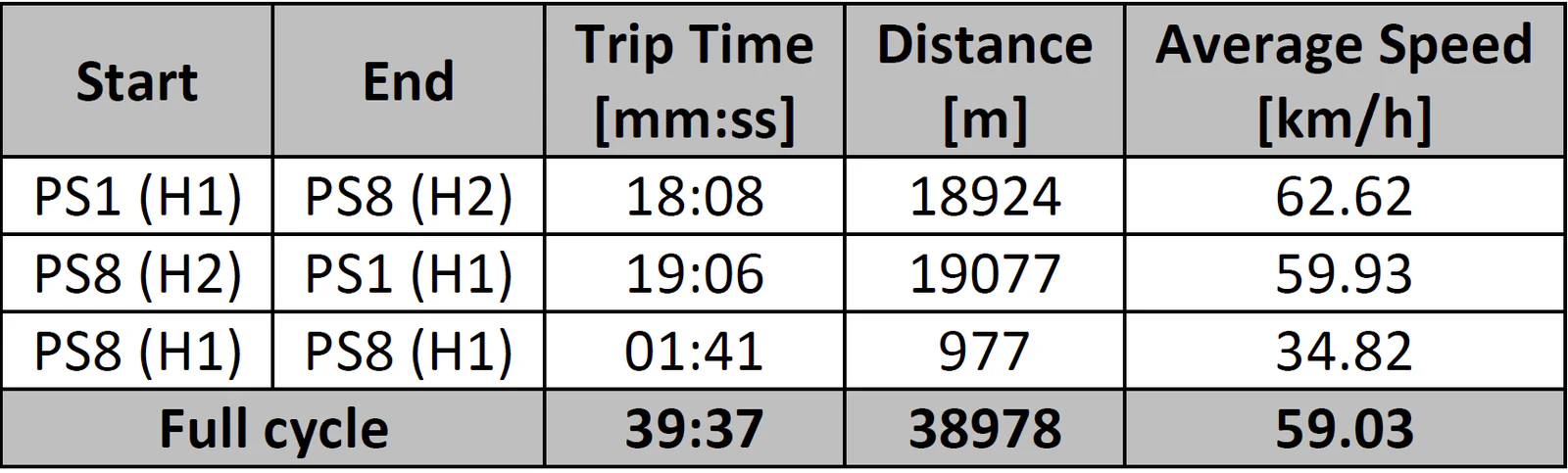
An operation simulation generally tests the following conditions:
- Normal operating status
- Shortest headway at turnbacks
- Partial operation scenarios
- Single-track operation scenarios
- Train injection and withdrawal for wind-up and wind-down


Rolling stock optimization
When a new vehicle is introduced to an existing system, its effects on the system are determined: speed–time curves, energy consumption and the effects on traction power and catenary are examined in detail. In procurement tenders, authorities are supported in determining life-cycle costs by realistically calculating the energy costs of different vehicles on the same line.
Our services also include finding and confirming the most suitable alignment for operations: by analysing the trip times and capacity (headway) of different route designs we help railways and transport authorities develop the most cost-effective design. The vehicle library and the ease of adding new vehicle models answer questions such as:
- Can the train meet the planned trip time?
- What will the energy consumption be under multi-train operation?
- What share of the regenerated energy is used, and how much is burnt in the brake resistors?
- What happens if another vehicle is added to the train?
- What is the effect of shutting down one or more diesel engines in a DMU?
- Would the electrification system allow a second locomotive?
In train procurement, both the administration and the manufacturers can be supported on optimum dimensioning. The table below shows, for one project, the effect of different vehicle characteristics on travel time, main traction power parameters and energy consumption, which is why optimizing the vehicle traction package matters.

FAQ
Under which conditions can headway be analysed?
Under deterministic and stochastic conditions, for a single train or multi-track, multi-train operation, with train performance alone or together with the traction power system. Un-interfered and interfered headway are determined with the safe braking algorithms taken into account.
What are the outputs of a traction power study?
Instantaneous and RMS substation and feeder currents, train voltages, rail potential and stray currents, energy consumption, regenerative energy usage and short-circuit currents. The outputs follow the scope of the project.
Do you need simulations for your project?
Write to us about your traction power, headway, train movement or energy efficiency studies, and we will scope your project needs together.
info@hisim.com.tr